
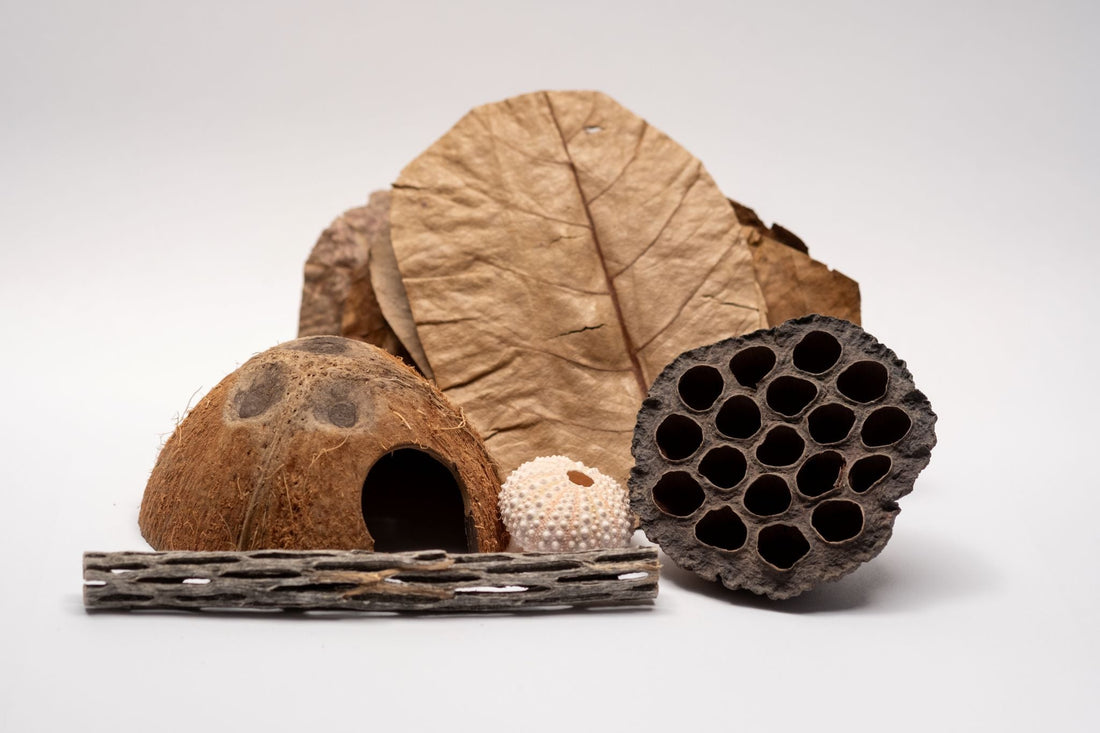
Hermit crabs are curious, active animals that need more than just a shell and some sand to thrive. In the wild, they forage through leaf litter, climb over bark and seed pods, and chew on a wide variety of natural materials. Bringing that richness into their enclosure is one of the best things you can do for their health and happiness.
Why Botanicals for Hermit Crabs?
Botanicals serve multiple purposes in a hermit crab enclosure:
- Foraging enrichment — hermit crabs will explore, climb, and chew on pods and leaves for hours
- Nutritional variety — many botanicals are safe for hermit crabs to eat and provide trace minerals and fiber
- Claw health — chewing on harder pods helps keep their claws active
- Mental stimulation — a varied, changing environment reduces stress and encourages natural behaviors
- Shelter — larger pods and coconut-based items provide hiding spots
Introducing the Hermit Crab Botanical Enrichment Pack
We've put together our Hermit Crab Botanical Enrichment Pack specifically for hermit crab keepers — a curated selection of botanicals that are safe, enriching, and loved by hermit crabs. It takes the guesswork out of building a naturalistic enclosure.
Top Botanicals for Hermit Crab Enclosures
Catappa Indian Almond Leaves — A must-have. Hermit crabs love to forage through leaf litter, and catappa leaves are nutritious and safe to eat. They also help maintain humidity.
Lotus Seed Pod Heads — The chambers of a lotus pod make a fascinating foraging puzzle for hermit crabs. They'll spend time investigating every hole.
Coconut Caves — A natural coconut shell hide that doubles as a climbing structure. Hermit crabs are naturally drawn to coconut-based items.
Jungle Pod / Split Nut Pod — A larger open pod that adds a naturalistic layer to the enclosure floor and gives hermit crabs something to climb over and hide in.
Thin Cholla Wood — Lightweight and porous, cholla wood is a natural climbing structure that hermit crabs love to explore and forage on as biofilm develops.
Coconut Palm Frond Paddles — Durable and long-lasting, palm paddles add naturalistic texture to the enclosure floor and retain humidity well.
Alder Cones — Small and easy to scatter throughout the enclosure, alder cones are safe for hermit crabs to handle and forage on.
Setting Up a Naturalistic Hermit Crab Enclosure
Layer the enclosure floor with a mix of coconut fiber substrate and sand, then add a generous layer of leaf litter on top. Place a few larger pods and a coconut cave for structure. Scatter cones and smaller pods throughout. Replenish leaves and smaller items as they get eaten or break down.
No sterilization needed for hermit crab enclosures — simply add botanicals directly. Any mold that appears is natural and safe.
A Note on Safety
All botanicals from NaturePods are natural, unbleached, and free from pesticides or chemical treatments, making them safe for hermit crabs to interact with and consume. When in doubt, start with our Hermit Crab Botanical Enrichment Pack — it's curated specifically with hermit crab safety in mind. You can also browse our full Hermit Crab Botanicals collection for more options.