
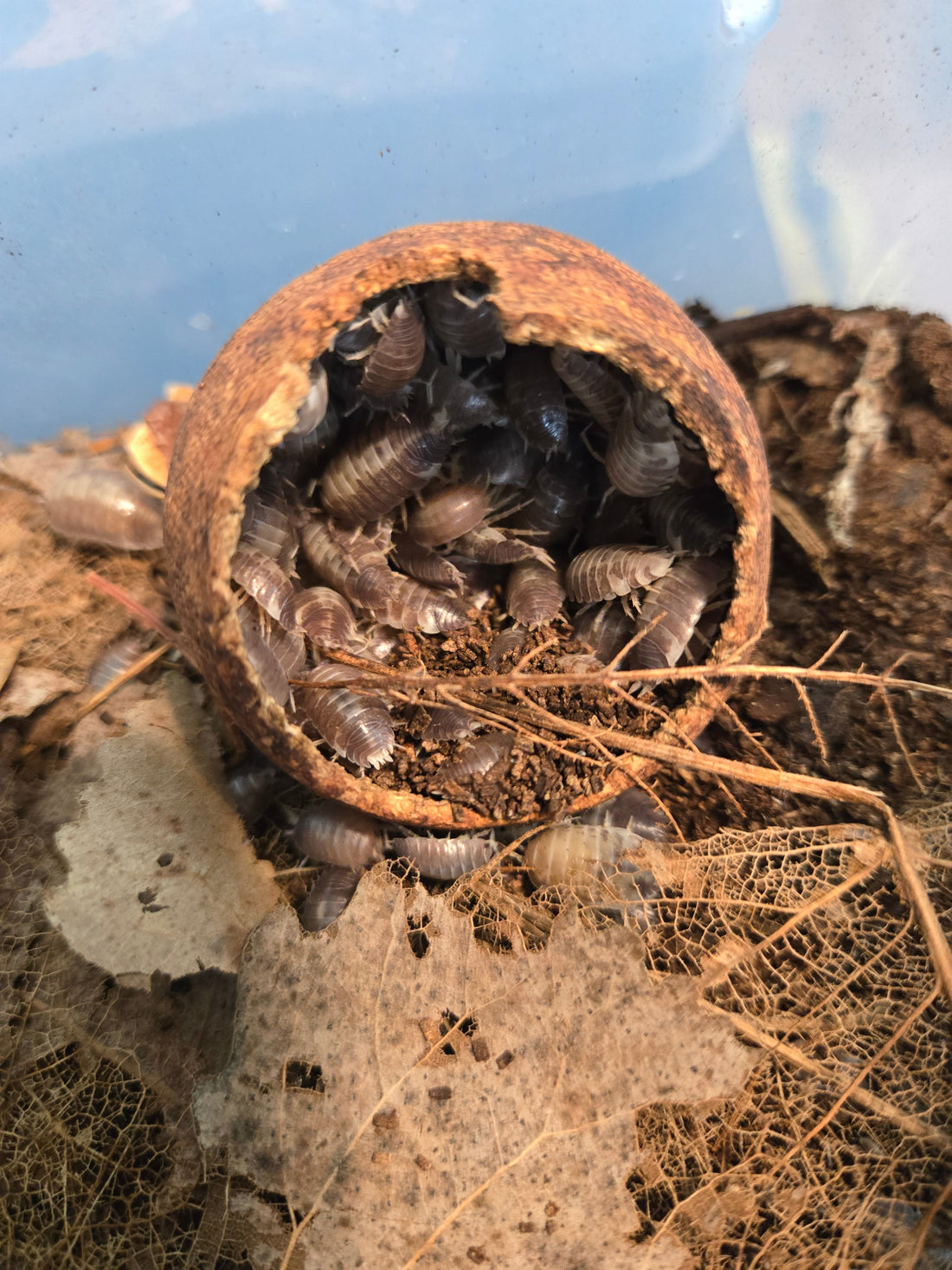
Isopods are nature's cleanup crew — and in a bioactive enclosure, they thrive when given a naturalistic environment that mimics the forest floor. Seed pods and botanicals are one of the best ways to enrich your isopod setup, providing food, shelter, humidity retention, and foraging opportunities all in one.
Why Isopods Love Botanicals
In the wild, isopods live under leaf litter, bark, and decaying wood. They feed on decomposing organic matter. Adding botanicals to your enclosure recreates this environment and gives your isopods:
- Food sources — pods and leaves break down slowly, providing a continuous food supply
- Shelter — hollow pods and curved shells give isopods places to hide and molt safely
- Humidity retention — botanicals hold moisture and help maintain the humidity gradient isopods need
- Enrichment — foraging through varied textures keeps isopods active and healthy
Note: For terrarium and isopod enclosures, you do not need to sterilize botanicals. Simply add them directly to the enclosure. Any mold that appears is a natural part of the decomposition process and it will eventually run its course and go away.
Top Picks for Isopod Enclosures
Lotus Seed Pod Heads — The iconic lotus pod is a favorite for isopod keepers. The honeycomb chambers provide perfect hiding spots for smaller isopods and juveniles, and the pod breaks down slowly over months.
Mini Lotus Seed Pods — Same great structure as the full-size lotus, but scaled down for nano enclosures or smaller isopod species.
Ram's Horn Seed Pod — These unique curved pods add visual interest with their distinctive shape, and the textured surfaces provide excellent hiding and foraging surfaces. Their dense structure holds moisture well.
Small Bell Cups — The cup-like structure provides a favorite hiding spot and the inside is an excellent foraging surface for isopods of all sizes.
Coco Flowers (Dried Palm Caps) — These unique palm caps add visual interest and provide additional foraging surfaces. Their fibrous texture holds moisture well and isopods love to colonize them.
Sponge Mushroom Caps — Dried mushroom caps are a microfauna hotspot — isopods and springtails flock to them as they develop biofilm and mold.
Catappa Indian Almond Leaves — Leaf litter is essential for any isopod enclosure. Catappa leaves break down into nutritious material that isopods feed on continuously.
Building the Perfect Isopod Botanical Layer
A good rule of thumb: layer your enclosure floor with a mix of leaf litter, a few smaller pods or cones, and 1–2 larger pods (lotus or bell cups) per square foot of enclosure space. Replenish as items break down.
Not sure where to start? Our Isopod and Springtail Botanicals collection has everything you need, or grab our Botanical Seed Pod Variety Pack to experiment and find your isopods' favorites.